In a world driven by technology and trade, unique identifiers are the fingerprints of our property. Whether you are buying a used iPhone, purchasing a pre-owned sedan, or registering a new laptop for warranty, you will encounter a string of confusing numbers.
Is an IMEI just a fancy serial number? Is a VIN the same thing as a license plate? Mixing these up can lead to costly mistakes—like buying a stolen phone that won’t connect to a network or a car with a hidden accident history.
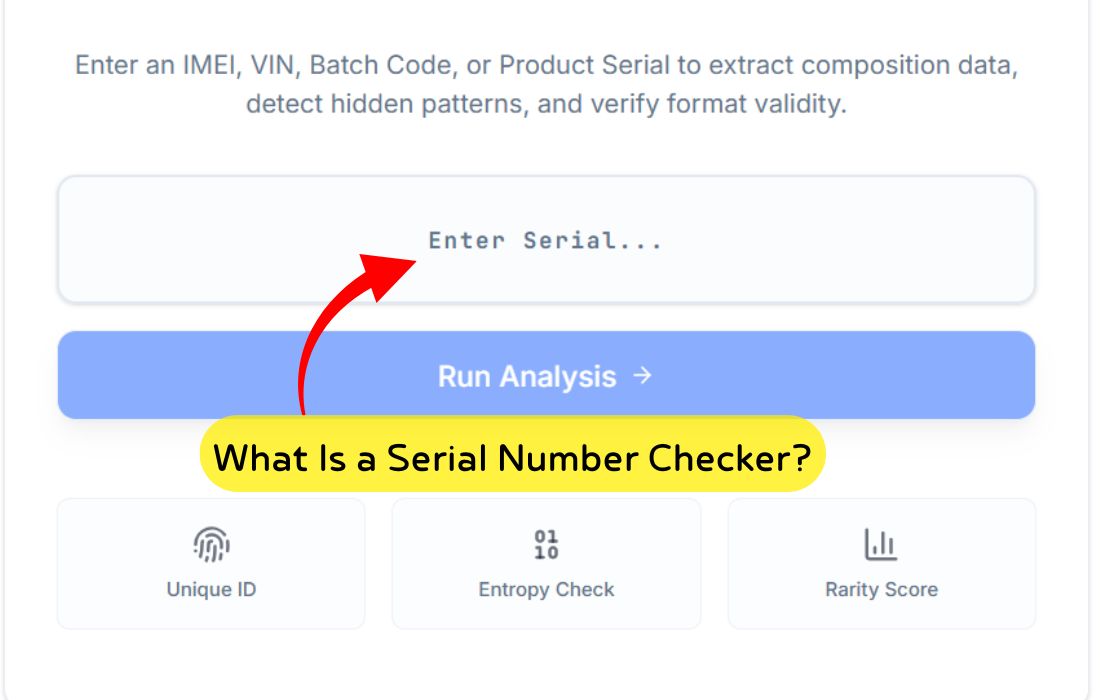
This guide breaks down the differences between Serial Numbers, IMEI, and VIN. We will explain what they are, when to use them, and how tools like Fancy Serial Number Checker can help you verify your assets instantly.
Table of Contents
1. What Is a Serial Number?
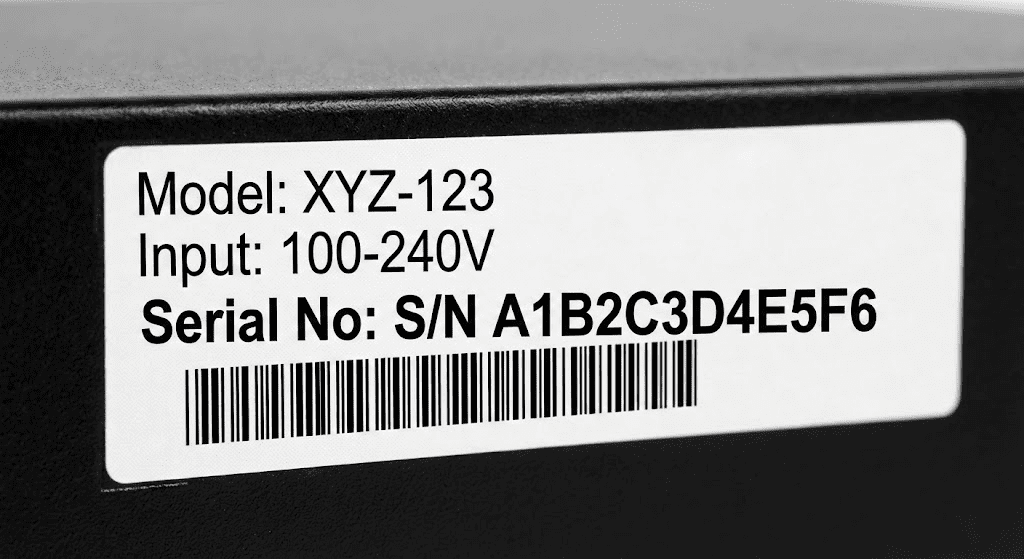
Think of a Serial Number (S/N) as a manufacturer’s internal tracking code. It is a unique string of characters assigned to a single unit of a product to distinguish it from every other unit of the same model.
While a “Model Number” tells you what the product is (e.g., a PlayStation 5), the Serial Number specifies which exact PlayStation 5 you are holding.
Where Are Serial Numbers Found?
Manufacturers place these numbers in locations that are protected from wear and tear but accessible to the user:
- Electronics: Printed on a sticker on the back or bottom of the device.
- Software: Inside the “About” menu or on the installation card.
- Appliances: On the door jamb of a fridge or the back panel of a washing machine.
- Luxury Goods: Engraved on the casing of a watch or stamped on a leather tag in a handbag.
What Does a Serial Number Lookup Reveal?
Performing a serial number lookup is crucial for:
- Warranty Status: verifying if the device is still covered for repairs.
- Authenticity: confirming the product isn’t a counterfeit.
- Recalls: checking if the specific batch has safety defects.
- Production Date: determining exactly when the item was made.
2. What Is IMEI?
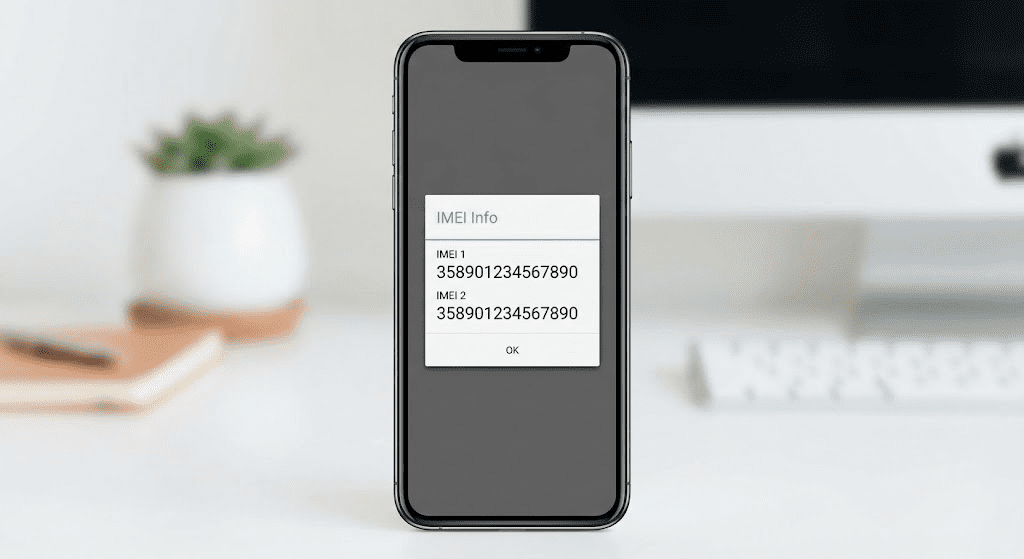
IMEI stands for International Mobile Equipment Identity. Unlike a standard serial number, which varies by brand, the IMEI is a global standard used exclusively for mobile devices.
Uniquely Mobile
If a device connects to a cellular network (like a smartphone, 4G tablet, or cellular smartwatch), it must have an IMEI. If your device has dual SIM slots, it will likely have two IMEI numbers—one for each slot.
Where to Find IMEI
Finding your IMEI is standardized across almost all phones:
- Universal Code: Open your phone’s dialer and type
*#06#. The number will pop up instantly. - Settings: Go to
Settings > General > About(iOS) orSettings > About Phone(Android). - Physical Locations: On the SIM card tray or the original packaging box.
Why IMEI Matters
The IMEI is the backbone of mobile security.
- Blacklisting: If a phone is reported stolen, carriers use the IMEI to block it from connecting to the network, rendering it useless as a phone.
- Unlocking: To switch carriers, the IMEI is required to generate an unlock code.
- Trade-In Value: Companies use the IMEI check to verify the exact storage capacity, model, and color of the device before offering a price.
3. What Is VIN?
VIN stands for Vehicle Identification Number. It is the automotive industry’s equivalent of a DNA profile. Since 1981, the format has been standardized to 17 alphanumeric characters for all road-legal vehicles.
The 17-Character Code
A VIN isn’t just a random number; it is a structured code.
- First 3 digits: World Manufacturer Identifier (Where it was made and by whom).
- Middle digits: Vehicle attributes (Engine type, body style, safety restraints).
- Last digits: The unique serial number for that specific vehicle production line.
What a VIN Check Reveals
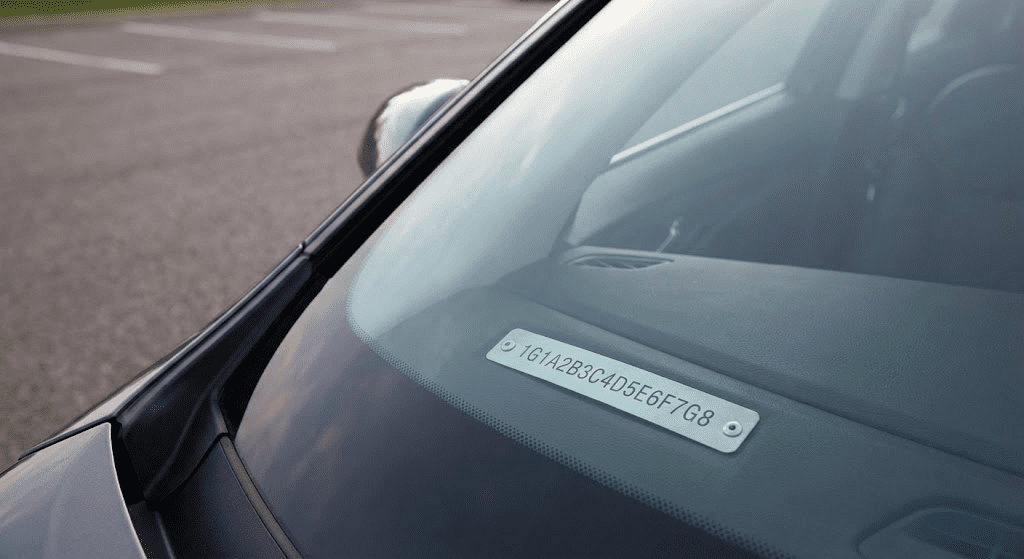
When buying a used car, a VIN check is non-negotiable. It pulls data from government and insurance databases to reveal:
- Accident History: Was the car in a major crash?
- Title Status: Is it a “Salvage” or “Flood” vehicle?
- Odometer Fraud: Has the mileage been rolled back?
- Theft Status: Is the car currently reported stolen?
4. Serial Number vs IMEI vs VIN (Comparison Table)
To help you visualize the differences, here is a quick comparison of these product identifiers:
| Feature | Serial Number (S/N) | IMEI | VIN |
| Full Form | Serial Number | International Mobile Equipment Identity | Vehicle Identification Number |
| Primary Use | Internal manufacturer tracking & warranty | Cellular network identification & security | Vehicle registration & history tracking |
| Target Products | Electronics, appliances, luxury items | Smartphones, cellular tablets, modems | Cars, trucks, motorcycles, trailers |
| Format | Varies (Numbers & Letters) | Strictly 15 Digits (Numeric) | 17 Characters (Alphanumeric) |
| Who Assigns It? | The Manufacturer (Brand specific) | GSMA (Global Association) | The Manufacturer (ISO Standard) |
| What It Reveals | Warranty, production date, specs | Network status (blacklist), carrier lock | Accidents, thefts, title, mileage |
| Changability | Hard to change (sticker/engraving) | Illegal to change (in most countries) | Illegal/Felony to tamper with |
5. When Should You Check Which Number?
Knowing which identifier to use depends entirely on what you are trying to do.
Scenario A: Buying a Used Smartphone → Check IMEI
Why: You need to know if the phone is blacklisted. A phone with a clean serial number but a “bad” IMEI will be rejected by cellular towers. Always run an IMEI check before handing over cash.
Scenario B: Buying a Used Car → Check VIN
Why: A shiny exterior can hide a flooded engine. The VIN is the only way to access the vehicle’s history report to see if it has been totaled or stolen.
Scenario C: Repairing a Laptop → Check Serial Number
Why: Support agents need the S/N to check if your warranty is active. They do not need a VIN or IMEI for a WiFi-only laptop.
Scenario D: Verifying a Luxury Watch → Check Serial Number
Why: High-end brands like Rolex or Omega keep databases of serial numbers. Checking this helps ensure you aren’t buying a “Super Clone” fake.
6. How Fancy Serial Number Checker Helps
Navigating manufacturer websites to decode these numbers can be frustrating. This is where Fancy Serial Number Checker becomes an essential tool for consumers and resellers.
Instead of guessing what a code means, Fancy Serial Number Checker simplifies the process by aggregating data into one easy-to-use platform.
- Universal Support: Whether you need a serial number lookup for a gadget or an IMEI check for a phone, the tool handles multiple categories.
- Instant Decoding: It breaks down complex codes to tell you exactly when and where your item was manufactured.
- Value Assessment: For currency collectors, it identifies “Fancy Serial Numbers” on banknotes (like repeating digits 77777777) that could be worth thousands.
- Fraud Prevention: It quickly flags anomalies that suggest a number might be fake or altered.
By acting as a central hub for product identifiers, Fancy Serial Number Checker saves you time and protects your wallet from scams.
7. Common Myths & Mistakes
Even tech-savvy users fall for these misconceptions. Let’s clear them up.
Myth 1: “IMEI is just a serial number.”
Fact: While it acts like one, it has legal standing. Changing a serial number voids a warranty; changing an IMEI is a crime in many jurisdictions because it facilitates mobile fraud.
Myth 2: “The VIN is on my license plate.”
Fact: No. The license plate is assigned by the state and changes when the car is sold. The VIN is stamped into the metal of the car and stays with it forever.
Myth 3: “If the Serial Number is there, it’s genuine.”
Fact: Counterfeiters often copy real serial numbers and print them on fake products. Always cross-reference the serial number with the device’s physical quality and software details.
8. FAQs
Q: Is IMEI a serial number?
A: Technically, yes, it is a type of serial number, but it is a specialized global standard used only for cellular devices to manage network access. Standard serial numbers are for manufacturer warranty and inventory.
Q: Can two products have the same serial number?
A: Yes, if they are from different manufacturers. A toaster from Brand A could theoretically have the same serial number as a drill from Brand B. However, two products from the same brand will not share a number.
Q: What is a VIN number used for?
A: A VIN is used to track a vehicle’s life history, including accidents, ownership changes, theft reports, and manufacturer recalls. It is essential for insurance and registration.
Q: Can a VIN tell me accident history?
A: Yes. When you run a VIN through a history report service, it checks police and insurance databases to see if that specific VIN was involved in a reported accident.
Q: Is checking serial numbers safe?
A: Yes, it is completely safe. Sharing a serial number generally does not pose a security risk, unlike sharing passwords or credit card numbers. It is simply a product identifier.
Q: Do all products have serial numbers?
A: Most high-value or electronic goods do. However, cheap commodities (like a pack of pencils or a generic cable) usually only have a barcode (UPC) for the product type, not a unique serial number for the specific unit.
Conclusion
Understanding Serial Number vs IMEI vs VIN is more than just technical trivia—it is a critical skill for the modern consumer. Whether you are avoiding a stolen phone via an IMEI check, dodging a lemon car with a VIN lookup, or verifying a warranty with a serial number, these identifiers are your first line of defense against fraud.
Don’t leave your next purchase to chance. Use the right number, check it with a trusted tool like Fancy Serial Number Checker, and buy with confidence.