We’ve all been there. You find a pair of high-end sneakers or a professional-grade camera online at a price that feels like a steal. Your heart races, your finger hovers over the “Buy Now” button, but a small voice in the back of your head asks: Is this actually real?
In the digital age, the “steal” of a lifetime is often exactly that—someone stealing your hard-earned money in exchange for a cheap knockoff. Counterfeit products have evolved. They don’t just live in back alleys anymore; they live in polished web stores and sponsored social media ads.
If you want to protect your wallet and your peace of mind, you need a system. This guide is your ultimate shield. We’re breaking down exactly how to verify product authenticity before you ever enter your credit card details.
Table of Contents
1. Why Online Shopping Can Be Risky
The convenience of one-click shopping comes with a dark side. The global counterfeit market is a billion-dollar industry, and it’s thriving.
The Rise of “Superfakes”
We aren’t just dealing with poorly spelled brand names anymore. “Superfakes” are high-quality replicas that look, feel, and even smell like the real thing. They use similar materials but lack the safety standards and longevity of genuine items.
The Scam Ecosystem
- Ghost Sites: Websites that look like official brand outlets but disappear after 30 days.
- Third-Party Marketplace Hijackers: Scammers who take over legitimate listings on major platforms to ship fakes.
- Manipulated Social Proof: Bot-generated reviews that make a scammer look like a 5-star hero.
The Risk Factor: According to recent trade data, nearly 3.3% of global trade is in counterfeit goods. From electronics that catch fire to skincare that causes rashes, the stakes are higher than just losing money.
2. The Complete Product Authenticity Checklist
Before you checkout, run through these seven steps. If a listing fails even one of these, proceed with extreme caution.
🔍 Step 1: Audit the Seller’s Credibility
Don’t just look at the product; look at the person selling it.
- Check History: On platforms like Amazon or eBay, click on the seller’s name. How long have they been active? Avoid “Just Launched” sellers offering high-value items.
- Business Address: Legitimate businesses have a physical footprint. Google the address provided in their “Contact Us” section. If it’s a residential house or a random parking lot, it’s a red flag.
🔍 Step 2: Spot the “Fake” in the Reviews
Reviews are the easiest things to fake. Look for these warning signs:
- The “Review Dump”: 100 five-star reviews all posted on the same day.
- Vague Language: Real customers mention specific details (“The hinge on this laptop is a bit stiff”). Fake reviews stay generic (“Great product, fast shipping, A+”).
- Check the “Verified Purchase” tag: While not foolproof, it adds a layer of security.
🔍 Step 3: The “Too Good to Be True” Price Test
If a brand-new iPhone is being sold for 40% off the MSRP (Manufacturer’s Suggested Retail Price), it is a fake. Brands like Apple, Sony, and Louis Vuitton strictly control their pricing. They don’t have “secret” 70% off clearance sales on random websites.
🔍 Step 4: Use Reverse Image Search
Scammers rarely take their own photos. They steal high-res images from the official brand website.
- Pro Tip: Right-click the product image and select “Search Google for Image.” If the same photo pops up on 50 different sketchy websites, the seller doesn’t actually have the item in hand.
🔍 Step 5: Inspect Packaging Details
Authentic brands obsess over packaging. If you see:
- Blurry printing or typos on the box.
- Flimsy cardboard or lack of protective inserts.
- Missing manuals or “generic” looking cables. …you are likely looking at a counterfeit.
🔍 Step 6: Verify Brand Website Listings
Many brands have a “Where to Buy” or “Authorized Retailer” page. If the website you are shopping on isn’t listed there, the brand won’t honor the warranty, and they can’t guarantee the product is real.
3. Serial Number Verification: Your Secret Weapon
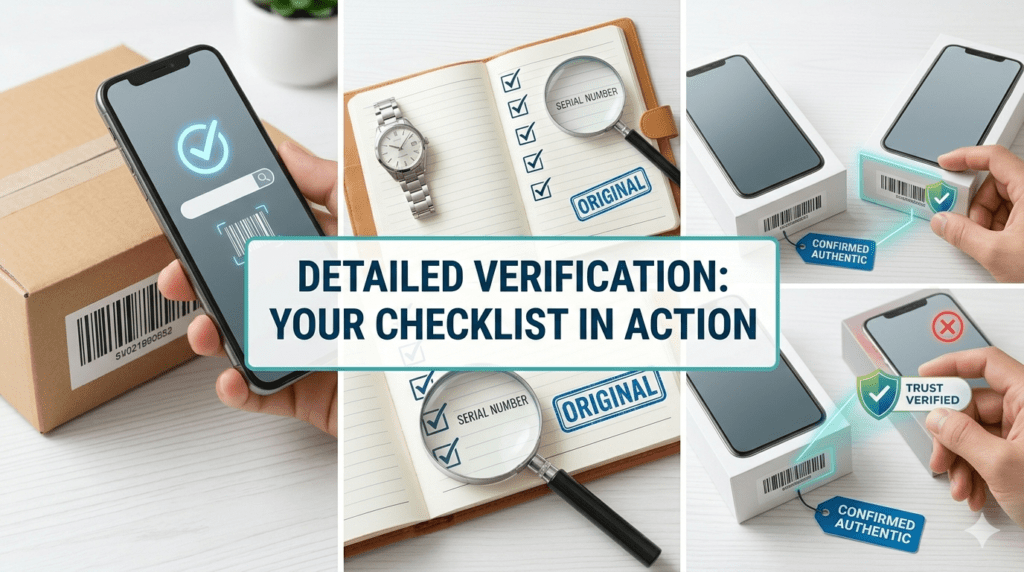
If there is one thing counterfeiters struggle to fake perfectly, it’s the Serial Number (SN). This unique string of characters is the “fingerprint” of a product.
Why Serial Numbers Matter
Every genuine high-value item—be it a Dyson hairdryer, a Rolex, or a Samsung TV—is logged in a manufacturer database. A fake product will either have a completely made-up number or a duplicate number copied from a single real item and printed on 10,000 fakes.
How to Verify a Serial Number Online
- Locate the Number: Find the SN on the product’s physical body and compare it to the number on the box. They must match.
- Check the Format: Research what that brand’s serial numbers usually look like (e.g., “12 digits, starting with two letters”).
- Use a Verification Tool: Instead of hunting through messy manufacturer websites, you can use specialized databases.
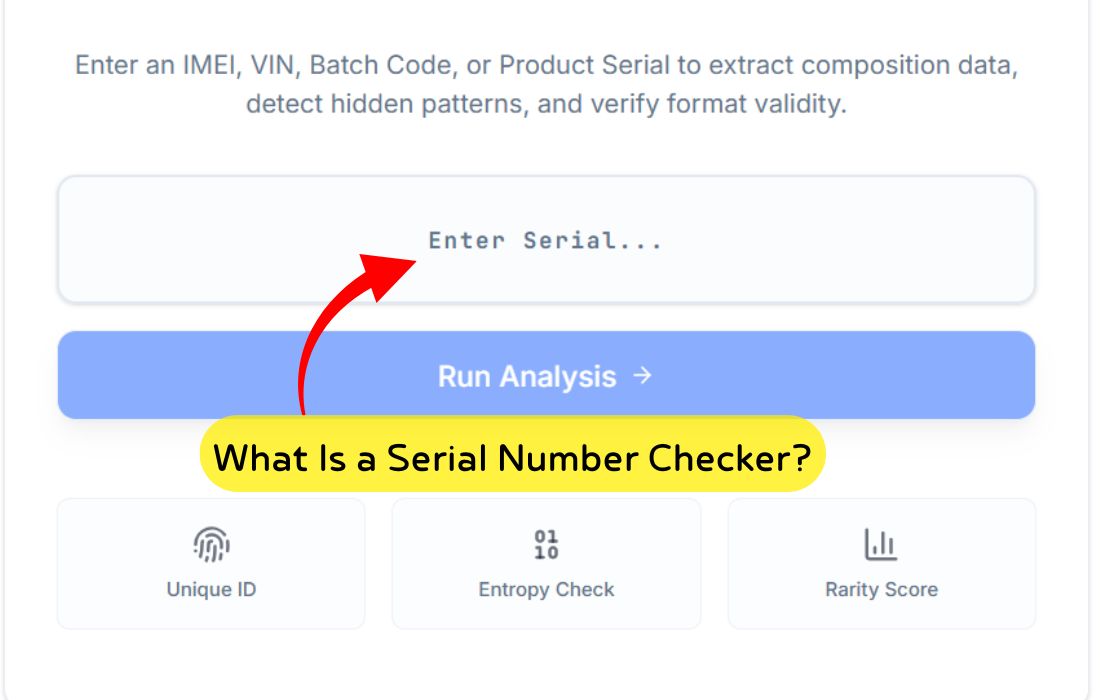
Expert Recommendation: We recommend using the Fancy Serial Number Checker. It’s a streamlined tool that helps you cross-reference serial numbers against known manufacturer formats and databases. It’s an easy way to get a “second opinion” before you commit to a purchase.
4. Common Mistakes Buyers Make
Even savvy shoppers fall into these traps. Avoid them at all costs:
- Trusting “Sponsored” Ads: Just because an ad appears on your Instagram feed doesn’t mean it’s vetted. Scammers pay for ads too.
- Ignoring the URL: Scammers use “typosquatting.” For example, selling on
www.nike-outlets-store.cominstead of the officialwww.nike.com. - Rushing Due to “Limited Stock”: Scammers use fake countdown timers to stress you out so you don’t perform your due diligence. Stay calm.
5. Pro Tips for Bulletproof Shopping
To stay 100% safe, follow these “Golden Rules”:
- Stick to Official Stores: When in doubt, buy directly from the brand’s official site.
- Use Secure Payment Methods: Never pay via wire transfer, Western Union, or Crypto for consumer goods. Use a Credit Card or PayPal. These offer Buyer Protection and dispute options.
- Check the Return Policy: If a site says “No Returns” or “All Sales Final” on high-ticket items, run away.
- Verify Before Payment: Always use a serial number checker or a brand verification tool before the return window closes.
6. Summary: Your Quick-Action Checklist
- [ ] Is the price realistic for this brand?
- [ ] Does the URL look official (no extra dashes or weird extensions)?
- [ ] Did the reverse image search show the photo belongs to the seller?
- [ ] Have you checked the seller’s long-term rating?
- [ ] Is there a valid serial number I can verify?
7. FAQs (Frequently Asked Questions)
This guide is written to answer those questions in plain English, cutting through the technical jargon so you can feel confident knowing exactly what you are looking at and why it matters.
How do I verify if a product is original?
The best way is to cross-reference the product’s physical attributes (weight, logo placement, material quality) with the official manufacturer’s specs and verify the serial number through an official database or a tool like Fancy Serial Number Checker.
Can serial numbers be faked?
Yes, but it’s difficult to do well. Scammers often print the same “real” serial number on thousands of fake boxes. If you search a serial number and it shows as “already registered” or appears on multiple “scam alert” forums, it’s a fake.
What is the safest way to shop online?
Shopping through authorized retailers and using a credit card with fraud protection is the gold standard. Always look for the “padlock” icon in your browser’s address bar to ensure the site is encrypted.
How to check authenticity before delivery?
While you can’t touch the product, you can ask the seller for a “tagged photo”—a picture of the actual item with a piece of paper showing today’s date and your name written on it. If they refuse, they likely don’t have the item.
Does a low price always mean it’s a fake?
Not always, but it’s the #1 indicator. “Open box” items or refurbished goods can be cheaper, but they should still come with a warranty and a verifiable serial number from a reputable seller.
Final Thought: Online shopping should be exciting, not stressful. By taking five minutes to run through this checklist and using tools like the Fancy Serial Number Checker, you can shop with the confidence of an expert. Don’t let scammers win—verify before you buy!