What is the truth about serial numbers?
The truth about serial numbers is that they are not a foolproof guarantee of authenticity. While they help track manufacturing data and warranty status, scammers can easily duplicate real serial numbers onto counterfeit goods. Reliable verification requires using official databases and cross-referencing physical product details with digital records.
Table of Contents
Introduction:
The Little Sticker That Fools the World
You’re staring at a brand-new pair of high-end headphones or perhaps a shiny new smartphone you just bought from a “great” online seller. You flip it over, see a long string of digits and letters, and breathe a sigh of relief.
“It has a serial number,” you think. “It must be the real deal.”
Here’s the truth: That string of numbers might be lying to you.
Most people treat serial numbers like a magic seal of approval. We’ve been conditioned to believe that if a product has a unique ID, it’s safe, genuine, and protected. But in the world of high-tech counterfeits and sophisticated scams, serial numbers are often the first thing fraudsters manipulate.
You might be surprised to learn that some of the most common “facts” we believe about serial numbers are actually dangerous myths. In this guide, we’re going to pull back the curtain and debunk the top 10 serial number myths that could be costing you money and peace of mind.
Why Serial Number Myths Are Dangerous
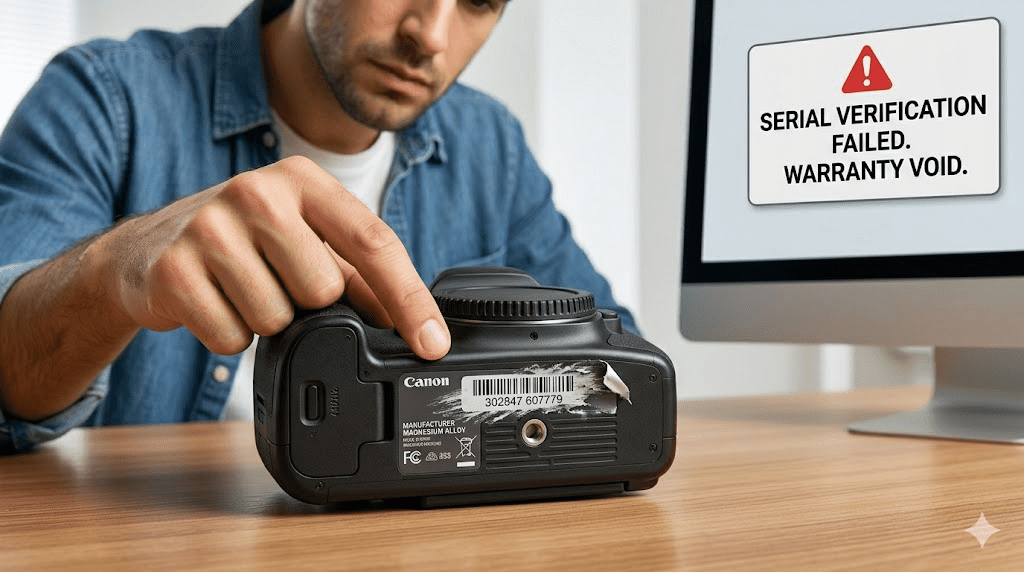
Believing a myth isn’t just a harmless mistake—it has real-world consequences. When you rely on false information about how serial numbers work, you open yourself up to several risks:
- Buying Fake Products: Scammers capitalize on your trust. If you think a serial number equals “real,” you might hand over hundreds of dollars for a $10 knockoff.
- Losing Warranty Coverage: Brands won’t repair a product if the serial number is flagged as fraudulent or “gray market.”
- Getting Scammed on Resale: If you try to sell a device later and find out the serial number is blacklisted, you’re the one who looks like the scammer.
It’s time to stop guessing and start knowing.
Myth vs Reality: The 10 Biggest Misconceptions
Myth #1: A serial number always guarantees authenticity.
Many people believe that if a product has a serial number, it must be genuine. They assume the manufacturer is the only one who can generate that specific code.
✅ Reality:
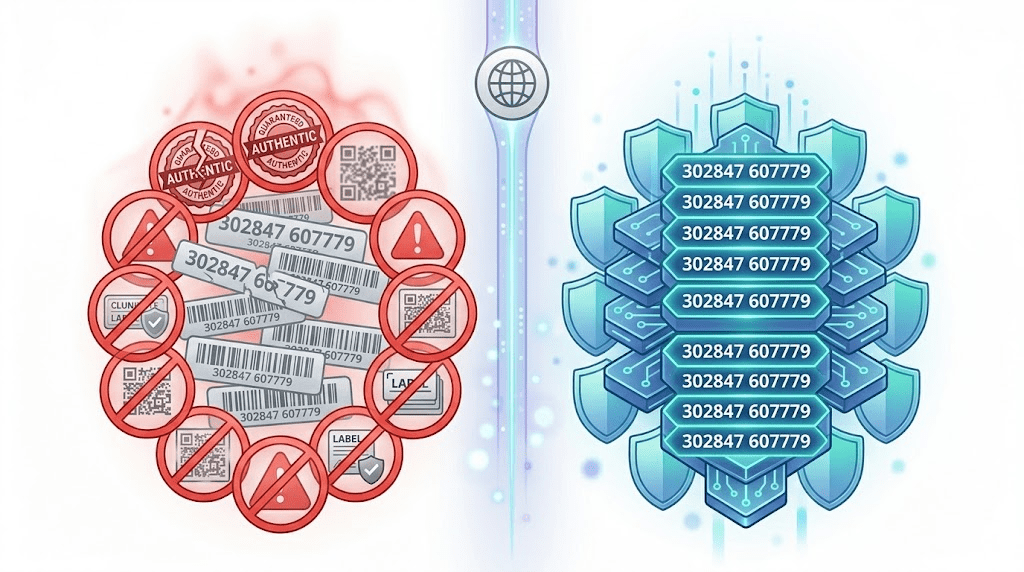
A serial number is just text. Scammers can easily find a real serial number from a genuine product and print that exact same number on 5,000 fake ones. Having a number is just the beginning; it doesn’t prove the hardware inside is real.
Pro Insight: Always check if the serial number on the box matches the one engraved on the device and the one found in the software settings.
Myth #2: Fake products don’t have serial numbers.
The old-school way of spotting a “fake” was looking for a missing serial number. Today, counterfeiters are much smarter.
✅ Reality:
Modern fakes almost always have serial numbers. In fact, high-end “super-clones” often use valid serial numbers stolen from real units currently sitting on store shelves. Most people don’t know this, but a fake can even show up as “valid” on a manufacturer’s website if the scammer used a real stolen code.
Myth #3: If the serial number scans, it’s real.
You take your phone, scan the barcode or QR code on the box, and it takes you to a website. It’s real, right? Not necessarily.
✅ Reality:
QR codes and barcodes are incredibly easy to generate. A scammer can create a QR code that sends your phone to a fake version of a brand’s verification page. You think you’re looking at an official site, but you’re actually on a site controlled by the counterfeiter.
Quick Tip: Look closely at the URL (web address) after scanning. If it’s
Apple-Verify-Secure.netinstead ofApple.com, it’s a scam.
Myth #4: Serial numbers can’t be duplicated.
There is a common belief that every serial number in existence is unique and can only exist on one physical item.
✅ Reality:
While they should be unique, they are frequently duplicated by “gray market” sellers and counterfeiters. This is known as Serial Number Cloning. If ten people own a pair of “Designer” sunglasses with the exact same serial number, nine of them (or all ten) are holding fakes.
Myth #5: All serial numbers can be verified online.
We live in a digital age, so we assume every company has a massive public database where you can type in a number and see the product’s history.
✅ Reality:
Not every brand offers public verification. Many luxury brands and niche tech companies keep their databases private for internal use only. If you can’t find an official checker, it doesn’t mean the item is fake—but it does mean you need to look for other signs of quality.
Myth #6: Expensive products are always genuine if they have a serial number.
There’s a psychological trap where we think, “No one would fake a $2,000 camera this accurately.”
✅ Reality:
The more expensive the item, the more incentive scammers have to fake the serial number perfectly. High-ticket items like luxury watches, cameras, and laptops are the primary targets for serial number fraud.
Myth #7: You don’t need to verify if buying from “trusted” third-party sellers.
You might think a seller with 1,000 positive reviews on a marketplace is a safe bet.
✅ Reality:
Even “trusted” sellers can be fooled by their own suppliers. Sometimes, sellers unknowingly buy “open-box” returns that were swapped for fakes by previous customers. Here’s the truth: Always verify the serial number yourself, regardless of who sold it to you.
Myth #8: A serial number error always means the product is fake.
You type in your number and get an “Error” or “Not Found” message. Panic sets in—is it a fake?
✅ Reality:
Sometimes it’s just a database lag. New products might take a few days or weeks to appear in a manufacturer’s system after leaving the factory. Alternatively, you might just be looking at a product intended for a different region (e.g., a European model sold in the US).
Pro Insight: If you get an error, try contacting the brand’s customer support directly. They can often see “invisible” numbers that the public site can’t.
Myth #9: Every brand uses the same serial number format.
People often expect a serial number to be 12 digits long or contain only numbers.
✅ Reality:
There is no global standard. A serial number can be 5 characters or 30. It can be all numbers, all letters, or a mix. Some brands include the manufacturing date in the code; others use a completely random string.
Myth #10: Once verified, there is no need to check again.
You checked it when you bought it. It’s “Real.” You’re done, right?
✅ Reality:
Serial numbers can be “blacklisted” after the fact. If a shipment of laptops is stolen from a warehouse, the manufacturer will flag those serial numbers as “Stolen” in their system later on. A serial number that was “clean” on Monday might be “flagged” by Friday.
The Truth About Serial Number Verification
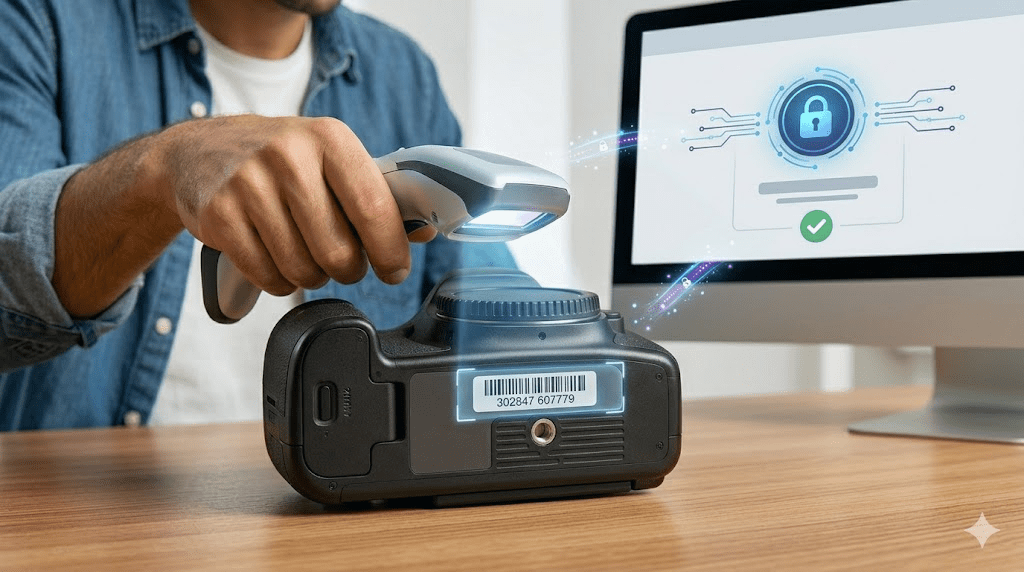
So, if serial numbers can be faked, cloned, and manipulated, how do you actually stay safe?
The truth about serial numbers is that they are one piece of a larger puzzle. Verification isn’t just about the number existing; it’s about the metadata attached to it. When you verify a serial number correctly, you should be looking for:
- Date of Manufacture: Does it match the era of the product?
- Product Specifications: Does the database say this number belongs to a “Silver 256GB” model while you’re holding a “Black 64GB” model?
- Warranty Status: Is the warranty already active or expired on a “new” item?
Multiple checks are vital. Never rely on a single sticker. Check the software, the physical engraving, and the packaging.
Tools That Help You Verify Serial Numbers
Manually digging through manufacturer websites can be a headache. This is where specialized tools come in to simplify the process and give you clarity.
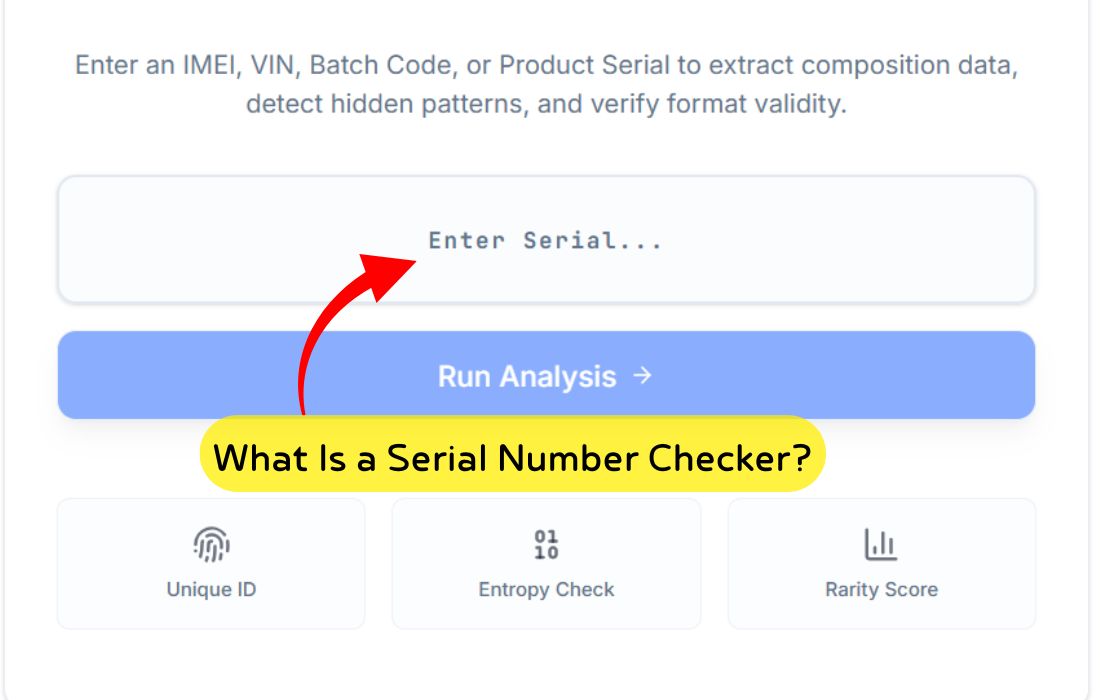
One of the most reliable ways to navigate these myths is by using the Fancy Serial Number Checker. Instead of guessing if a format is correct or searching for hidden database links, this tool helps you organize and validate serial number data efficiently.
It acts as a bridge between you and the complex world of serial number facts, helping you:
- Identify formatting errors quickly.
- Keep a record of your genuine devices.
- Avoid the confusion of “faked” layouts.
By using a dedicated checker, you remove the “human error” factor. It’s a simple, proactive step to ensure that the “unique” number you’re looking at is actually what it claims to be.
Pro Tips to Stay Safe (Actionable Section)
Want to become an expert at spotting serial number fraud? Follow these four golden rules:
- Verify BEFORE Buying: If you are buying used, ask the seller for a photo of the serial number. Check it against the manufacturer’s site before you even meet up or hit “buy.”
- Use Official Sources: Only trust verification tools that have a proven track record or official manufacturer databases.
- The “Feel” Test: Scammers often get the number right but the font or placement wrong. If the serial number looks crooked, blurry, or like a cheap sticker, be wary.
- Keep Your Own Records: Once you buy a genuine product, take a photo of the serial number and your receipt. This protects you if you ever need to prove authenticity for a warranty claim or police report.
FAQs (Common Serial Number Misconceptions)
Are serial numbers unique?
Ideally, yes. Manufacturers use them to identify individual units. However, scammers frequently print the same real serial number on thousands of fake products.
Can fake products have real serial numbers?
Yes. Counterfeiters often “harvest” real serial numbers from genuine products in stores and print them on fakes so they pass basic online checks.
Why does my serial number not work?
It could be a typo, a product from a different region, a very new product not yet in the database, or—unfortunately—a sign that the product is not genuine.
Is serial verification 100% reliable?
No single method is 100%. You should always combine serial number checking with an inspection of the product’s build quality, packaging, and seller reputation.
How do scammers fake serials?
They use high-quality printers to mimic labels, laser-engrave numbers onto hardware, and even program fake serial numbers into the device’s software (especially in fake iPhones and AirPods).
Does a missing serial number always mean a fake?
Not always. On older or refurbished items, the sticker may have worn off. However, for a “new” product, a missing serial number is a massive red flag.
Call-to-Action
Don’t let a clever scammer steal your hard-earned money. Now that you know the truth about serial numbers, you have the upper hand.
Before you make your next big purchase or if you’re doubting an item you already own, take 60 seconds to verify. Use the Fancy Serial Number Checker to stay organized and informed.
Knowledge is your best defense—verify smartly!
Conclusion: Don’t Trust Myths—Verify Smartly
Serial numbers are a powerful tool for consumers, but they aren’t magic. As we’ve seen, the world of common serial number misconceptions is vast. From cloned numbers to fake verification websites, scammers are working hard to stay one step ahead.
The takeaway? Don’t just look for a number—look for the truth behind it. By understanding these 10 myths, you’ve already made yourself a much harder target for fraudsters. Stay curious, stay skeptical, and always use the right tools to protect your purchases.
Share this guide with a friend who loves tech—you might just save them from a $500 mistake!