

Picture this: You are selling a slightly used laptop online. A potential buyer messages you, asking to see a picture of the serial number to “verify it is real.”
It seems like an innocent request. But should you share it? Can someone track you using a serial number? Could a scammer steal that number and use it against you?
In today’s highly connected digital world, protecting your personal data is more important than ever. We are constantly warned about hackers, phishing scams, and identity theft. Because of this, it is completely natural to worry about serial privacy risks. You want to know exactly what happens when you share your device’s unique identifier.
The truth about serial number security lies somewhere between common internet myths and genuine, real-world risks. While a serial number is not a magical tracking device, exposing it to the wrong person can lead to significant headaches, warranty fraud, and even financial loss.
In this comprehensive guide, we will break down exactly how serial numbers work. We will show you what they can do, what they cannot do, and how you can safely verify your devices.
By the end of this article, you will have the knowledge and confidence to protect your serial number and keep your personal property secure.
Quick Answer: Can Serial Numbers Be Tracked or Stolen?
Can serial numbers be tracked or stolen? Yes, serial numbers can be stolen and misused for warranty fraud, device cloning, or creating fake listings. However, a serial number cannot be used to track your physical GPS location, spy on you, or access your personal data. They are simply unique identification codes, not tracking software.
Table of Contents
What Serial Numbers Can and Cannot Do
To understand is a serial number safe to share, we first need to understand how manufacturers use these codes.
A serial number is simply a unique string of letters and numbers assigned to a single, specific product. Think of it like a digital fingerprint or a fingerprint for a piece of hardware. It exists primarily for the manufacturer’s database, not for GPS satellites or hackers.
Here is a clear breakdown of what these numbers actually do in the real world.
What Serial Numbers CAN Do?
1. Identify Specific Products
Manufacturers produce millions of identical devices. The only way to tell your camera, smartphone, or watch apart from another is through its serial number. It tells the manufacturer exactly which factory built it and on what date.
2. Track Warranty and Repair Status
When you contact customer support because your device broke, the first thing they ask for is this number. It links directly to a database that shows if your product is still under warranty and whether it has been repaired before.
3. Assist in Recalls and Safety Bulletins
If a company discovers a defective battery in a specific batch of laptops, they use serial numbers to issue a recall. They will publish a range of affected numbers so consumers can check if their device is at risk.
4. Help Law Enforcement Identify Stolen Goods
If your item is stolen and you have the serial number written down, you can give it to the police. If the thief tries to pawn the item or send it in for repair, the number can flag the device as stolen property in national databases.
What Serial Numbers CANNOT Do?
1. Track Your Live GPS Location
A serial number is just a piece of text printed on a sticker or hardcoded into a chip. It does not have a battery, an antenna, or GPS capabilities. Nobody can type your serial number into a map and see where you live.
2. Access Your Personal Data
Your photos, emails, banking passwords, and browsing history are completely separate from your hardware’s serial number. Knowing the number on the back of your TV or laptop does not give a hacker a backdoor into your hard drive.
3. Spy on Your Activities
You cannot be recorded, listened to, or monitored simply because someone knows your serial number. Surveillance requires malicious software (malware) or compromised network connections, not a static identification string.
💡 Pro Tip: Never confuse a serial number with an IP address or an IMEI number. While an IP address routes internet traffic and an IMEI connects to cell towers, a standard serial number is purely for inventory and warranty management.
Real Risks You Should Know: Serial Number Fraud
While we have established that a serial number cannot track your physical location, that does not mean sharing it is completely harmless.
Serial number fraud is a massive industry. Scammers actively hunt for legitimate serial numbers online to exploit them for financial gain. If you are not careful, you could easily become an unwitting victim.
Here are the real-world threats you need to watch out for.
1. Warranty Hijacking and Fake Claims
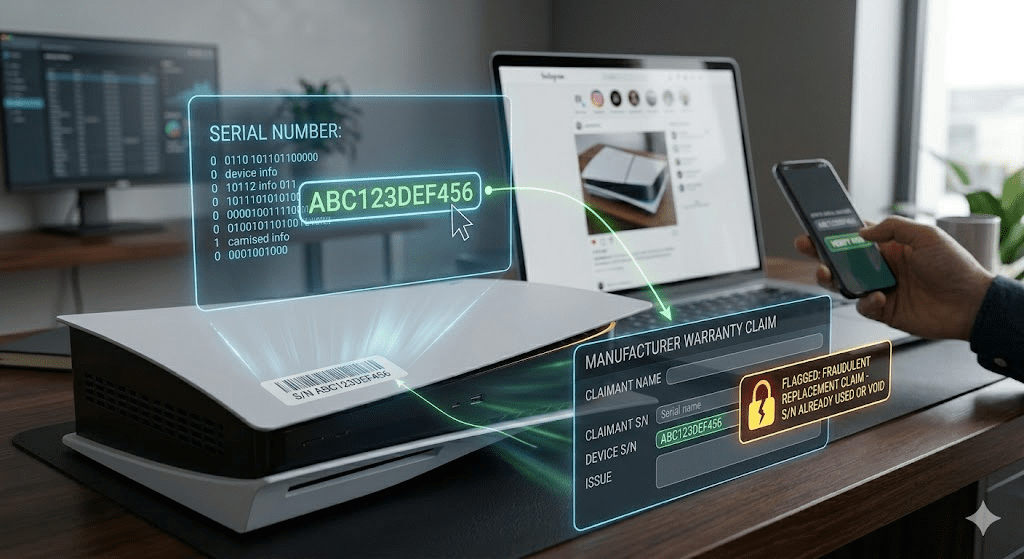
This is one of the most common and frustrating risks for consumers. Let’s say you post a high-quality photo of your new gaming console online, and the serial number is clearly visible.
A scammer writes down that number. They then contact the manufacturer, claiming their console is broken. They use your serial number as “proof” of ownership. The manufacturer might send the scammer a replacement device or a valuable replacement part.
When your console actually breaks a year later, you contact support—only to be told your warranty has already been used or voided.
Mini Real-Life Scenario:
John listed his high-end camera lens for sale and included a photo of the serial number to “prove it was real.” A scammer used that number to claim a free replacement part from the manufacturer. When John finally sold the lens, the new buyer couldn’t register it, leading to a massive dispute and a refunded sale.
2. The Resale Market Scam
Scammers frequently browse marketplaces like eBay, Craigslist, or Facebook Marketplace looking for stolen goods. To make their stolen goods look legitimate, they need real, clean serial numbers.
If you share your clean serial number publicly, a scammer might print a fake sticker with your number and slap it onto a stolen device. If law enforcement checks that stolen device, it shows up under your legitimate product’s history, causing massive confusion.
3. Product Cloning and Counterfeiting
Counterfeiters who manufacture fake luxury watches, designer bags, or high-end electronics need real serial numbers to make their fakes look convincing.
They scrape the internet for photos of legitimate serial numbers and print them on thousands of cheap knockoffs. If your serial number ends up on a counterfeit batch, the manufacturer might blacklist the number entirely. You could be locked out of official software updates or denied repair services.
4. Fraudulent Listings
Sometimes, a scammer doesn’t even have a product to sell. They just want to steal someone’s money.
They will take your photos—including the photo of your serial number—and create a fake listing on another website. When a cautious buyer asks the scammer, “Is this real? Can I check the serial?”, the scammer proudly provides your number. The buyer checks it, sees it is real, sends the scammer money, and receives nothing.
Common Myths About Serial Number Tracking
Because of movies and television, people have wild misconceptions about what hackers can do. Let’s separate the cybersecurity facts from Hollywood fiction.
- Myth 1: Hackers can take over my device with just a serial number.
- Myth 2: If someone knows my serial number, they can see my name and address.
- Myth 3: Serial numbers are only for expensive electronics.
- Myth 4: It is safe to post unboxed photos of new gadgets on social media.
How to Protect Your Serial Numbers
Now that you understand the serial privacy risks, it is time to take action. Protecting your information is not difficult, but it does require a few simple habit changes.
If you want to ensure your devices remain secure, follow this actionable checklist to protect serial numbers.
1. Never Publicly Share Your Serial Numbers
This is the golden rule. Treat your serial number like a credit card number or a password. Do not post it on public forums, Reddit, Twitter, or public marketplace listings.
2. Blur Numbers in Images and Screenshots
If you are selling an item online and want to show the back of the device or the original box, use a photo editing app to blur or black out the serial number and any barcodes.
If a buyer insists on seeing it before purchasing, only share it privately through a secure message, and only after you have vetted the buyer’s profile to ensure they look legitimate.
3. Register Your Products Immediately
As soon as you buy a new device, go to the official manufacturer’s website and register it under your name and email address.
Once a serial number is linked to your official account, it becomes incredibly difficult for a scammer to steal it or use it for fake warranty claims. You have established a digital paper trail proving you are the true owner.
4. Keep Your Proof of Purchase Safe
Your receipt or digital invoice is your ultimate defense. If a scammer somehow clones your serial number and tries to claim ownership, the manufacturer will demand proof of purchase.
Take a photo of your paper receipts and save them in a dedicated folder on your computer or cloud storage. If a dispute ever arises, the person with the original, dated receipt always wins.
5. Buy From Trusted, Reputable Sellers
When buying used goods, the risk of inheriting a stolen or blacklisted serial number is high. Always buy from reputable platforms that offer buyer protection.
Avoid shady, cash-only meetups for high-value electronics unless you have thoroughly verified the device’s history beforehand.
💡 Pro Tip: If you are throwing away the original box for a TV, laptop, or smartphone, take a black permanent marker and scribble over the serial number sticker before putting it in the recycling bin. Dumpster divers often hunt for intact boxes to harvest numbers.
Safe Ways to Verify Serial Numbers
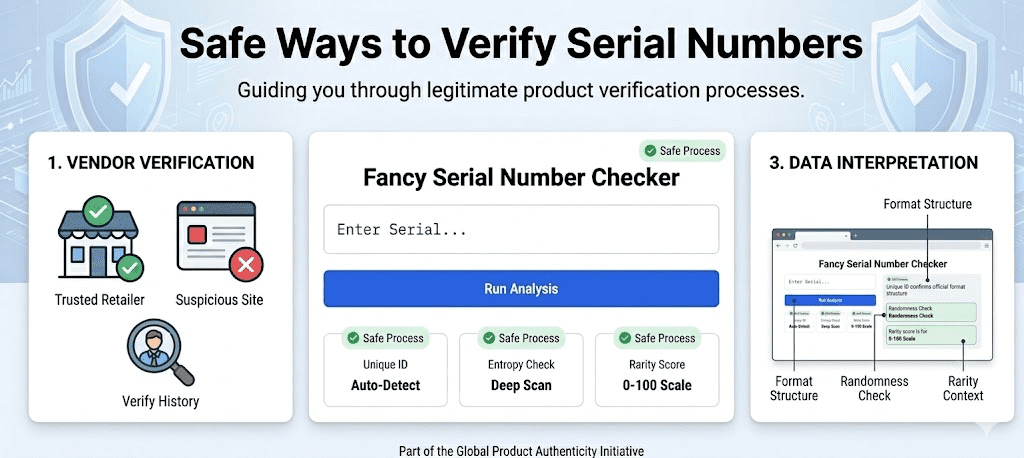
If you are on the buying end of a transaction, you should verify the serial number to ensure you aren’t buying stolen property or a cheap fake. But you must do it safely.
Using random, unverified third-party websites to check a serial number can be dangerous. Some of these shady sites are actually “honeypots” designed to harvest legitimate serial numbers from cautious buyers.
The Step-by-Step Safe Verification Process:
Step 1: Ask for the number privately.
If the seller hasn’t posted it (which is a good sign!), ask them to send it to you in a direct message.
Step 2: Check the format.
Do a quick web search to see what a standard serial number looks like for that specific brand. If Apple serial numbers are typically 10-12 characters long, and the seller gives you a 20-character string, something is wrong.
Step 3: Use an Official or Highly Trusted Tool.
The safest route is to type the number directly into the official manufacturer’s warranty check page (e.g., Apple’s Check Coverage page, or Lenovo’s Warranty Lookup).
However, jumping between dozens of different manufacturer sites can be exhausting, especially if you buy and sell items frequently.
Step 4: Use a Verified Checking Service.
For a fast, secure, and unified experience, we highly recommend using the Fancy Serial Number Checker.
Unlike shady third-party sites, the Fancy Serial Number Checker is built with privacy-first architecture. It securely queries databases to verify the authenticity of a device without storing, logging, or selling the serial numbers you input. It is the perfect tool for privacy-conscious buyers who want instant peace of mind without risking their data.
Pro Tips for Privacy-Conscious Buyers
Taking your serial number security to the next level requires a slightly more defensive mindset. Here are a few advanced strategies to keep you safe in the digital marketplace:
- Trust Your Gut: If a seller is aggressively pushing you to check a serial number, or conversely, refusing to provide it under any circumstances in a private chat, walk away. Scammers often use high-pressure tactics to force a quick sale.
- Match the Hardware to the Software: If you are buying a smartphone or laptop in person, don’t just look at the sticker on the back. Turn the device on, go into the “Settings” menu, and check the “About Device” section. Ensure the digital serial number matches the physical sticker. Counterfeiters often put real stickers on fake hardware.
- Beware of “Clean” Number Sales: Believe it or not, people actually sell “clean” serial numbers on dark web forums to hackers. By keeping your numbers strictly offline and off social media, you keep yourself off these target lists.
- Use Secondary Emails for Registrations: If you are highly privacy-conscious, consider using a dedicated email address solely for registering product warranties. This keeps your primary inbox safe from data breaches if a manufacturer’s database is ever compromised.
Frequently Asked Questions (FAQs)
To ensure we cover every angle of can serial numbers be tracked, here are the answers to the most common questions users ask.
1. Can someone hack my phone using a serial number?
No. A serial number does not provide network access, remote control, or a backdoor into your phone’s operating system. Hacking requires software vulnerabilities or stolen passwords. Your serial number is strictly an identification label.
2. Is it safe to share serial numbers online?
No, it is highly discouraged. Sharing your serial number publicly exposes you to warranty fraud, product cloning, and counterfeit scams. Always keep this information private and only share it with verified buyers or official customer support channels.
3. Can serial numbers be duplicated?
Yes. Counterfeiters frequently duplicate legitimate serial numbers and print them on hundreds of fake products to make them look authentic. This is why manufacturers sometimes blacklist serial numbers that have been flagged for suspicious, duplicated activity.
4. What happens if someone steals my serial number?
If someone steals your number, they may try to file a fraudulent warranty claim to get free repairs or replacement parts. They might also use it to legitimize a stolen item or create a fake online listing. If this happens, you will need your original receipt to prove you are the true owner.
5. How do companies actually use serial numbers?
Companies use them primarily for supply chain logistics, inventory management, warranty tracking, and quality control. If a specific machine in a factory produces a batch of defective parts, the company uses serial numbers to track down exactly which products need to be recalled.
6. Can the police track a stolen item via its serial number?
The police cannot track its live location via GPS using a serial number. However, if you report the serial number as stolen, it enters a national database. If the thief tries to sell it to a pawn shop or trade it in at a retail store, the number will flag the system, allowing police to recover it.
7. Should I give the serial number to an eBay or Craigslist buyer?
You should never post it publicly in the listing photos. However, providing it privately to a serious buyer who wants to verify the item is not stolen is generally acceptable. Just ensure you have already registered the product in your name and have your original receipt on hand.
8. Does a serial number tell you when a product was made?
Yes, in many cases. Many manufacturers encode the year, month, and sometimes even the specific factory location directly into the format of the serial number.
Next Steps: Verify Safely and Securely
Navigating the used electronics market or protecting your brand-new purchases shouldn’t feel like a dangerous gamble. By understanding how serial numbers work and the genuine risks associated with them, you have already taken the most important step toward protecting yourself.
Remember: awareness is your best defense. Never share your numbers publicly, always blur your barcodes in photos, and register your high-value items the moment you take them out of the box.
When you do need to verify a device before a purchase, don’t leave it to chance. Avoid shady websites that might harvest your data. Instead, rely on secure, privacy-focused tools.
Take control of your digital security today. Try the Fancy Serial Number Checker for your next purchase—it is the fastest, safest, and most reliable way to verify device authenticity without compromising your privacy.
Conclusion
So, can serial numbers be tracked or stolen? The reality is clear: while no one is going to track your physical movements using a serial number, the threat of digital theft and warranty fraud is very real.
Your serial numbers are the digital keys to your physical property. They prove your ownership, secure your warranties, and protect you from buying counterfeit junk. Treating them with the same respect and caution as you would your personal passwords is a modern necessity.
By staying vigilant, avoiding common internet myths, and utilizing smart verification habits, you can confidently buy, sell, and manage your devices without fear. Stay safe, stay private, and always verify before you buy.